A website that reads like a condition report: precise, factual, in order.
A managed, custom-coded website for vehicle auction houses: live in 7 days, 90+ PageSpeed, weekly run list updates, researched articles and hosting included, from one monthly fee.
Dealer-only lanesPublic auctionsSalvage and total-lossClassic and collectorGovernment and fleetRepossession and lienholderOnline simulcastExotic and specialty
Dealer-only lanesPublic auctionsSalvage and total-lossClassic and collectorGovernment and fleetRepossession and lienholderOnline simulcastExotic and specialty
90+Google PageSpeed, guaranteed
7days to launch on Run List
5revisions a month included
$0
$0build fee due until your site is live
Client stories
The part I rate most highly is the form, not the visuals. It collects bidder type, sale date and vehicle reference up front, so the back-and-forth we used to do by reply has largely gone. It has quietly removed the slowest step in our intake.
APAnna PaddingtonOffice manager, salvage and repairable vehicle auctionReno, NevadaGot: Inquiry form and response workflow for vehicle auction registration
We reviewed the draft on handsets rather than a big screen, deliberately. The important details sit near the top and the inquiry button is impossible to miss. The days of talking customers through the menu are over.
AOAndre OsbourneCollections administrator, light commercial vehicle auctionNewark, DelawareGot: Mobile navigation and page layout for vehicle auction registration
They asked to see the questions customers genuinely ask us about vehicle auction registration, which I respected. They identified which questions belonged on the site and we checked every answer before launch. The phone calls about basic vehicle auction registration details have noticeably thinned out.
JMJohn MaitlandYard operations coordinator, public and trade vehicle auctionBillings, MontanaGot: FAQ research and editorial review for vehicle auction registration
The problem
Where does a generic website lose an auction house dealers and consignments?
In five places, and every one of them shows up on sale day. If two or more of these sound familiar, the site is costing you registrations.
A pulled or rescheduled lot still reads as running
A dealer plans a trip around a run that no longer holds, and your team spends the morning fielding the same call instead of running the sale.
Cost: dealers who do not show, and lanes that look disorganized on the one day it matters most.
A printed run sheet stands in for a real listing page
A vehicle described only in a printed sheet or a PDF has no page of its own to text a buyer, to rank in search, or to update as sale details change.
Cost: a shared link that points at a generic homepage instead of the vehicle someone is actually asking about.
Title status is buried, or missing entirely
A buyer bidding on a salvage or rebuilt vehicle finds out the title status only after they ask, or after they have already registered.
Cost: a buyer who feels misled, and a listing that damages trust in every other lot you run.
Registration questions arrive after hours, and wait
Dealer credential and deposit questions do not stop at 5pm, especially the night before a sale, and an unanswered question becomes a bidder who did not register.
Cost: a registered dealer count that could have been one confirmation higher.
No page exists for the lanes or formats you actually run
A buyer searching for a dealer-only lane or a salvage sale in your area finds a competitor's dedicated page before they find anything from your house at all.
Cost: search visibility that goes to whoever built the page you did not.
The cost of leaving it
What does an outdated auction site cost you every sale week?
It costs staff hours, paid clicks, consignments and search visibility, and none of it shows up as a line on an invoice. These are the four costs auction houses describe most often.
Every sale week repeats the same phone calls
What is running, what do I bring to register, is lot 212 still in the sale. Each call is a person on your team not running the lanes, and the questions come back every week because the site never answers them.
Paid clicks bounce before the page loads
If you run search or social ads to fill a sale, you pay for the click whether the page loads or not. A slow landing page on a phone at the lot means paying for visitors who leave before they see a single vehicle.
Consignors pick the house that looks established
A dealer, lender or collector deciding where to send units checks your site first. No past results, no clear sale calendar and no consignor page reads as a smaller operation than you are.
Searches for your sale formats go to someone else
Every week you do not have a page for your salvage lane or your public Saturday sale, the house that does collects those searches, those registrations and that search history.
The fix
How does the site fix it? Five fixes built into every plan
A status field built into every run list page
Scheduled, on the block, sold, no-sale or pulled, shown at the top of the listing and reflected on the lane page, so nobody plans a trip around a run that has changed.
A real page for every vehicle
Its own URL, its own photos, its own terms, shareable and indexed, not one row on a printed sheet that goes stale the moment the sale closes.
A required title-status field
Salvage, rebuilt, flood or clean, stated on every listing before it can publish, never left off a page by omission.
An AI Engine that answers after hours
On Condition Report and Full Consignment, registration and lane questions get answered at 9pm the night before a sale, with anything specific handed off cleanly.
A page for every lane you actually run
Built around how buyers search, so your house shows up for the formats you serve instead of losing that search to a competitor.
The signature page on every plan
The anatomy of a vehicle condition report
A car auction listing has to answer a fixed set of questions before anyone raises a hand. Here is what we build into every condition report page, and why each part earns its place.
Illustrative layout, not a live inspection
1
Run number & laneWhere and when this vehicle crosses the block
2
VIN placement & decode fieldsFull VIN, year, make, model and trim
3
Grade & inspection datePer your scale, dated to the actual inspection
4
Damage map & exterior notesPanel-by-panel notes tied to a diagram
5
Mechanical & drivetrain notesStarts, drives, known issues, as inspected
6
Title status flagClean, salvage, rebuilt, flood or parts-only
7
Mileage & odometer statusActual, exempt or not-actual, clearly marked
8
Announcements from the blockAnything stated verbally, recorded in writing
The inspection your grade comes from. We build the page it lands on.
1
Run number and lane
The run number and lane tell a buyer exactly where and when to be, and let them find this vehicle again instantly if they step away to check another lot.
2
VIN placement and decode fields
A full, legibly placed VIN lets a buyer or their inspector verify year, make, model and trim against public records before they ever raise a hand.
3
Grade and inspection date
A grade without a date is meaningless on a vehicle that has been sitting for weeks. Dating the inspection tells a buyer how current the assessment actually is.
4
Damage map and exterior notes
A diagram tied to panel-specific notes lets a buyer assess condition at a glance, rather than hunting through a paragraph for which side of the car was hit.
5
Mechanical and drivetrain notes
Whether a vehicle starts and drives changes its value more than almost anything else on the page, so it earns its own clearly labelled section, not a footnote.
6
Title status flag
Stating title status as a flag, not a buried line, is the single detail that most affects buyer trust on a salvage or rebuilt vehicle.
7
Mileage and odometer status
Actual, exempt or not-actual status has real legal weight, so it is shown as its own field rather than folded into a general description.
8
Announcements from the block
Anything the auctioneer states verbally at the block gets written onto the page too, so a buyer who was in a different lane at the time still sees it.
We build the page and the fields. Grading, inspection and title determinations come from your team or an inspection service you already use. We are not a licensed auctioneer, dealer or vehicle inspector.
What changes when the site is built for how a sale day actually runs
Before After
Run status
Before:A pulled vehicle still lists as running until someone thinks to update it.After:Status changes to pulled the moment you tell us, shown at the top of the listing.
Vehicle listings
Before:One printed run sheet covers every vehicle in the sale.After:Every vehicle gets its own page, its own photos and its own URL.
Title status
Before:Buried in a paragraph or missing until a buyer asks.After:A required field on every listing, stated before anyone bids.
After-hours questions
Before:A credential question at 9pm waits until morning for an answer.After:The AI Engine answers common registration and lane questions any hour, on Condition Report and Full Consignment.
Buyer registration
Before:Registration happens by phone, one caller at a time.After:A registration form on the site routes straight into your CRM.
Closed sales
Before:A closed sale is deleted or forgotten about.After:Closed sales move into a results archive that keeps working for search.
Included on every plan
What do you get on every plan? Everything it takes to run the site, not just design it
A run list page for every vehicle
Status, condition, photos and terms, built as one reusable template.
Buyer registration into your CRM
Connected by direct API, Zapier or Make, no manual re-entry.
One domain, included
Registered in your name, or point your existing one.
Managed hosting
SSL, CDN, DDoS protection and unmetered bandwidth.
Weekly run list updates
Status, photos and title flags kept current through the sale cycle.
Researched articles, every week
Cited, answer-first content on process, lanes and sale formats, so your house shows up for the questions buyers search before they search your name.
A team, not a ticket queue
Revisions turned around in working days, through your client portal.
Everything included
What's in each plan, feature by feature
Each plan includes everything in the plan before it. Here is every feature, what it does for an auction house, and the plan that first includes it.
The same fields in the same order on every vehicle: grade per your scale, VIN, damage map, mechanical notes, title and odometer status, block announcements.
A form that states what each sale requires (dealer license and resale certificate, or ID and deposit) and routes the completed registration into your CRM by API, Zapier or Make.
2 cited articles a week on Run List and Condition Report, 3 on Full Consignment, 2,500 to 3,200 words each, answering what buyers and consignors search.
Privacy, terms, cookie policy with consent that gates scripts, an accessibility statement, SMS consent wording, and sale terms, fee and disclosure pages.
Run ListCondition ReportFull Consignment
A client portal
From launch day: request revisions, raise support tickets, send files and message the team in one place.
Run ListCondition ReportFull Consignment
Added on Condition ReportCondition Report: $267 / month + usage
Answers routine calls about sale times, registration requirements and lane information at any hour, and hands anything vehicle-specific to a person. Every conversation is available in a call-analysis PDF.
Hours, sale-day posts and photos kept current on your Google Business Profile.
Run ListCondition ReportFull Consignment
Not included on any plan: grading or inspecting vehicles, setting reserves, titling, running the auction itself, your bidding platform or CRM subscription, and paid ad spend. See the plan table or compare us with other options.
Speed, ads and ranking
Why does page speed change what you pay for ads?
Your site is built to load fast on a phone and held to a 90+ PageSpeed standard. That matters most when you pay for traffic. A page that opens instantly keeps the dealer who was about to close the tab, and it is part of how an ad earns a better score.
Google Ads scores every keyword with a Quality Score, and landing page experience is one of its three components. A fast, relevant landing page is part of how an ad earns a better score, which can lower what you pay per click.
Google's own guidance on improving Quality Score recommends improving loading speed, because a slow page can be the difference between a visitor bouncing or registering.
More of the clicks you already pay for stay long enough to see the run list, the sale date and the registration button, instead of leaving while the page is still loading.
The same speed helps organic visitors and returning dealers on sale day, when a phone on the lot has one bar of signal.
Structure: a dedicated page per lane and sale format gives search engines something specific to match, instead of one homepage competing for everything at once.
We do not promise a specific cost-per-click, ranking or percentage. Ad costs depend on your bids, keywords and competition; a fast page removes one thing working against you.
3 to 5 monthstypical window to start ranking locally after launch
2researched articles a week, minimum
Found in search, cited in answers
How will buyers find your auction in search and AI answers?
Through four layers we build into every plan: SEO so search engines can match your pages, AEO so your answers get lifted into snippets and voice results, GEO so AI assistants can read and cite you, and structured data so every page says exactly what it is.
SEO
Pages search engines can match
Technical SEO (speed, clean URLs, sitemap, canonicals, redirects) and on-page SEO on every page, plus pages for your lanes, sale formats and the areas your sales draw from, so a local search lands on a page built for it.
AEO
Answers that get lifted
Answer-first paragraphs, FAQ blocks and short structured answers, the format featured snippets, voice assistants and AI answers pull from when someone asks how a buy fee or a title flag works.
GEO
Readable by AI assistants
An llms.txt file, consistent names for your house and sale formats, and plain citable facts, so assistants such as ChatGPT, Claude, Perplexity and Google AI Overviews can read and cite you. No one can guarantee a mention; this makes one more likely.
Schema
Structured data on every page
JSON-LD for Organization or LocalBusiness, Service, FAQPage and BreadcrumbList, generated from what the page shows, with Review markup only for real reviews. It tells search engines exactly what each page is.
Area pages are built for the cities and regions your sales actually draw from, on your own site. Rankings build over time, usually 3 to 5 months before local rankings start to show, and we never promise a position. How SEO for auction houses works.
What happens after you order
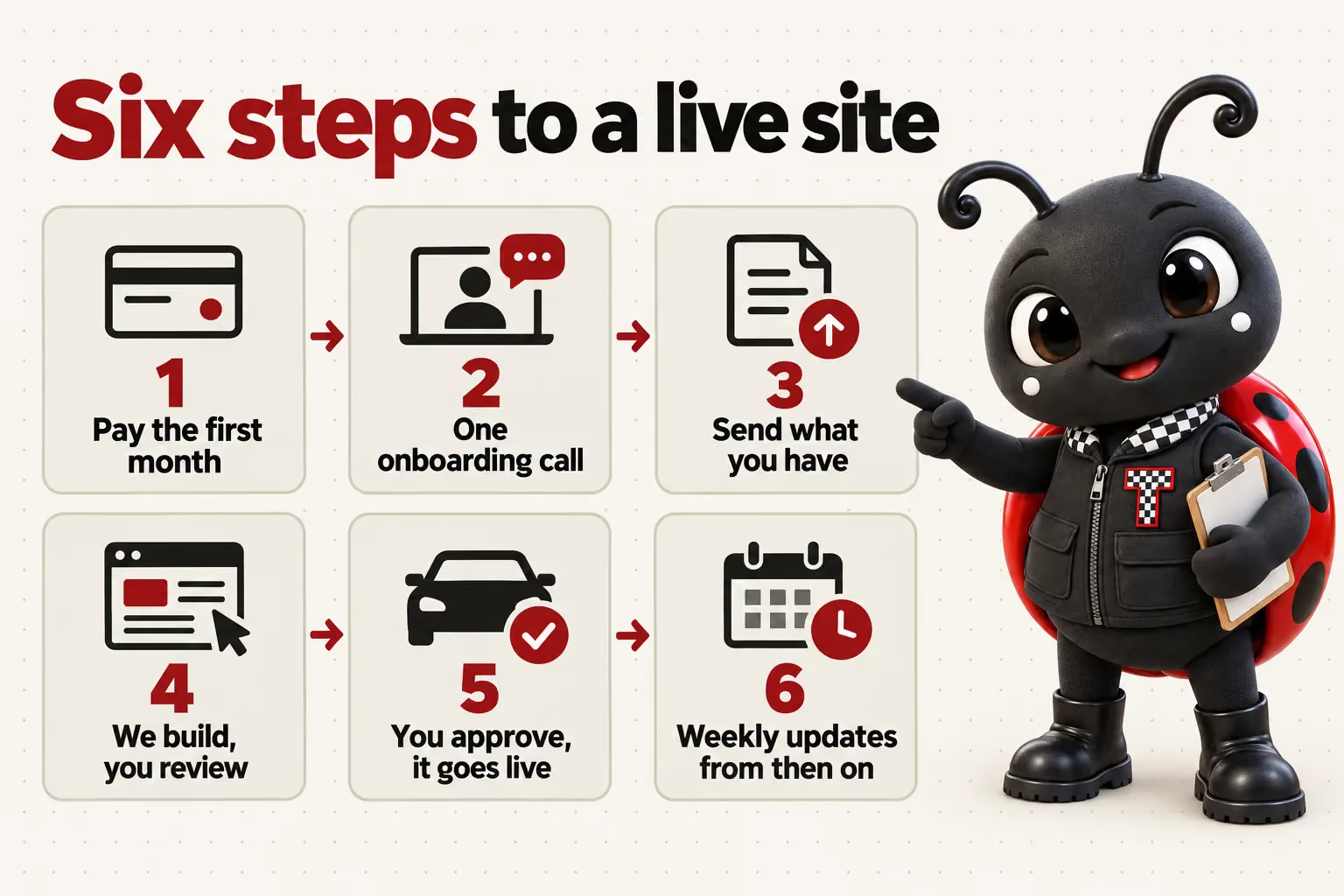
What happens after I order? Six steps to a live site
Nothing is charged for the build until the site is live and you have signed it off. The steps below are the whole process, including what we need from you and what keeps happening after launch.
Order
You pay the first month
That starts the plan and books your build. No build fee is charged at this point.
Call
One onboarding call
About 30 minutes on your lanes, sale formats, run list, domain and CRM. You leave with a launch date.
Supply
You send what you already have
A recent run list, one condition report, lot photos, sale terms and fees. One person on your side approves pages.
Build
We build and you review
Every page, registration, hosting, redirects and the compliance pages, with your notes gathered in the client portal.
Launch
You approve, it goes live
Live in 7 to 15 days depending on plan. The build fee is invoiced only after you approve.
Run
Weekly updates from then on
Run list changes, 5 revisions a month, articles every week, and on higher plans the AI Engine and Content Engine.
What auction houses say after the switch
Six auction houses, in their own words. Each names the work behind the result.
“
The part I rate most highly is the form, not the visuals. It collects bidder type, sale date and vehicle reference up front, so the back-and-forth we used to do by reply has largely gone. It has quietly removed the slowest step in our intake.
Anna Paddington, Office managersalvage and repairable vehicle auction, Reno, Nevada.
“
We reviewed the draft on handsets rather than a big screen, deliberately. The important details sit near the top and the inquiry button is impossible to miss. The days of talking customers through the menu are over.
Andre Osbourne, Collections administratorlight commercial vehicle auction, Newark, Delaware.
“
They asked to see the questions customers genuinely ask us about vehicle auction registration, which I respected. They identified which questions belonged on the site and we checked every answer before launch. The phone calls about basic vehicle auction registration details have noticeably thinned out.
John Maitland, Yard operations coordinatorpublic and trade vehicle auction, Billings, Montana.
“
The 'did you receive it?' calls about vehicle auction registration were a daily occurrence here. Now the sender gets a summary, the next step in plain language, and a way to correct mistakes. Duplicate submissions have dropped away almost completely.
Yvonne Crawley, Registration coordinatorused vehicle auction center, Tulsa, Oklahoma.
“
What I value about the vehicle auction registration guide is its restraint. It explains what the first conversation needs, and deliberately asks for nothing sensitive online. We include it in our first response as standard.
Dennis Pemberton, Title and paperwork clerklease return remarketing auction, Harrisburg, Pennsylvania.
“
We took the wording about vehicle auction registration seriously, and I am glad we did. It is accurate about the process and careful not to promise what only a conversation can settle. The awkward 'that's not quite what we meant' conversation has largely disappeared.
Nandini Pai, Membership coordinatorex-fleet van remarketing auction, Lexington, Kentucky.
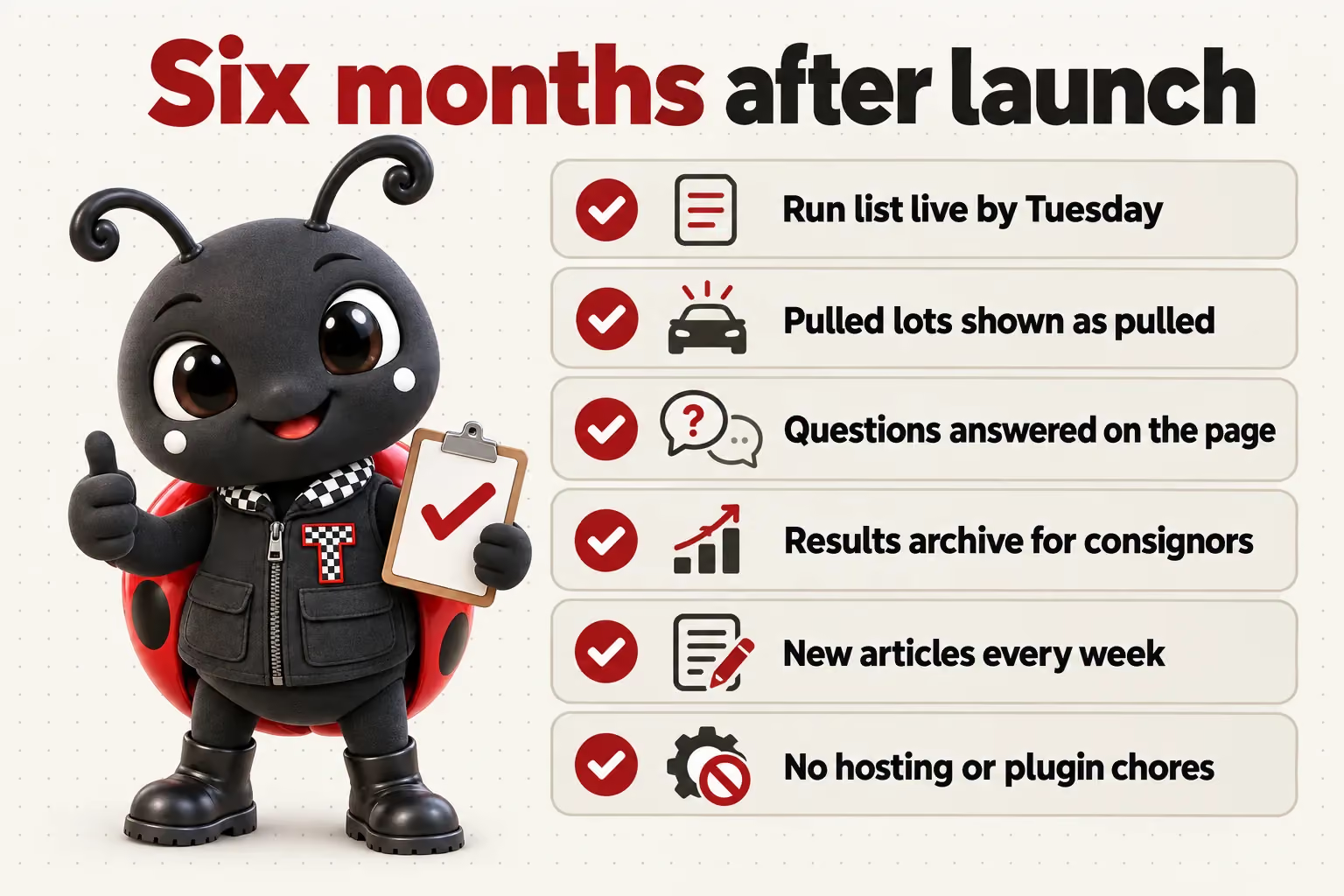
What does a normal sale week look like once it runs?
The run list for Thursday is live by Tuesday, every lot with its own page, and dealers text each other links instead of photos of a printed sheet.
A pulled lot shows as pulled within your revision turnaround, so nobody drives in for a car that is not crossing.
The questions that used to arrive by phone, what to bring, how the buy fee works, when preview opens, are answered on the page, in the chat or by text.
Closed sales sit in a results archive that consignors read before they call you.
Each week new researched articles answer what first-time bidders search, and they keep drawing visitors long after they are published.
Nobody at the house has touched hosting, plugins, SSL or a page builder since launch day.
The value case
What one monthly fee replaces
Plans start at $127 a month. Instead of a claimed saving, here is the list of jobs the fee covers, so you can price each against what you pay today.
A web designer on call
5 revisions a month, each any size, within 2 to 5 working days, and extra ones at a flat $20, instead of hourly change requests.
Hosting, SSL and security
Cloudflare hosting, SSL, CDN and DDoS protection are inside the fee, with no separate hosting, plugin or security bill.
A writer
2 to 3 researched articles a week, 2,500 to 3,200 words each, depending on plan.
An after-hours front desk
On Condition Report and Full Consignment, the AI Engine answers calls, chat, texts and DMs any hour and hands specifics to your team.
A social and profile manager
On Full Consignment, 3 social posts and 2 reels a week plus a managed Google Business Profile.
What does a vehicle auction website cost? Three plans, build fee after launch
A fixed monthly fee covers the site, hosting, domain, weekly run list updates, revisions and articles. The one-time build fee is invoiced only after you approve the live site.
Run List
The website, fully managed
$127/ month
plus $697 build fee, invoiced after launch
Live in 7 days
2 researched articles a week
Best for a house running its first sales with a real web presence.
The part I rate most highly is the form, not the visuals. It collects bidder type, sale date and vehicle reference up front, so the back-and-forth we used to do by reply has largely gone. It has quietly removed the slowest step in our intake.
APAnna Paddington, Office manager, salvage and repairable vehicle auction, Reno, Nevada. Got: Inquiry form and response workflow for vehicle auction registration
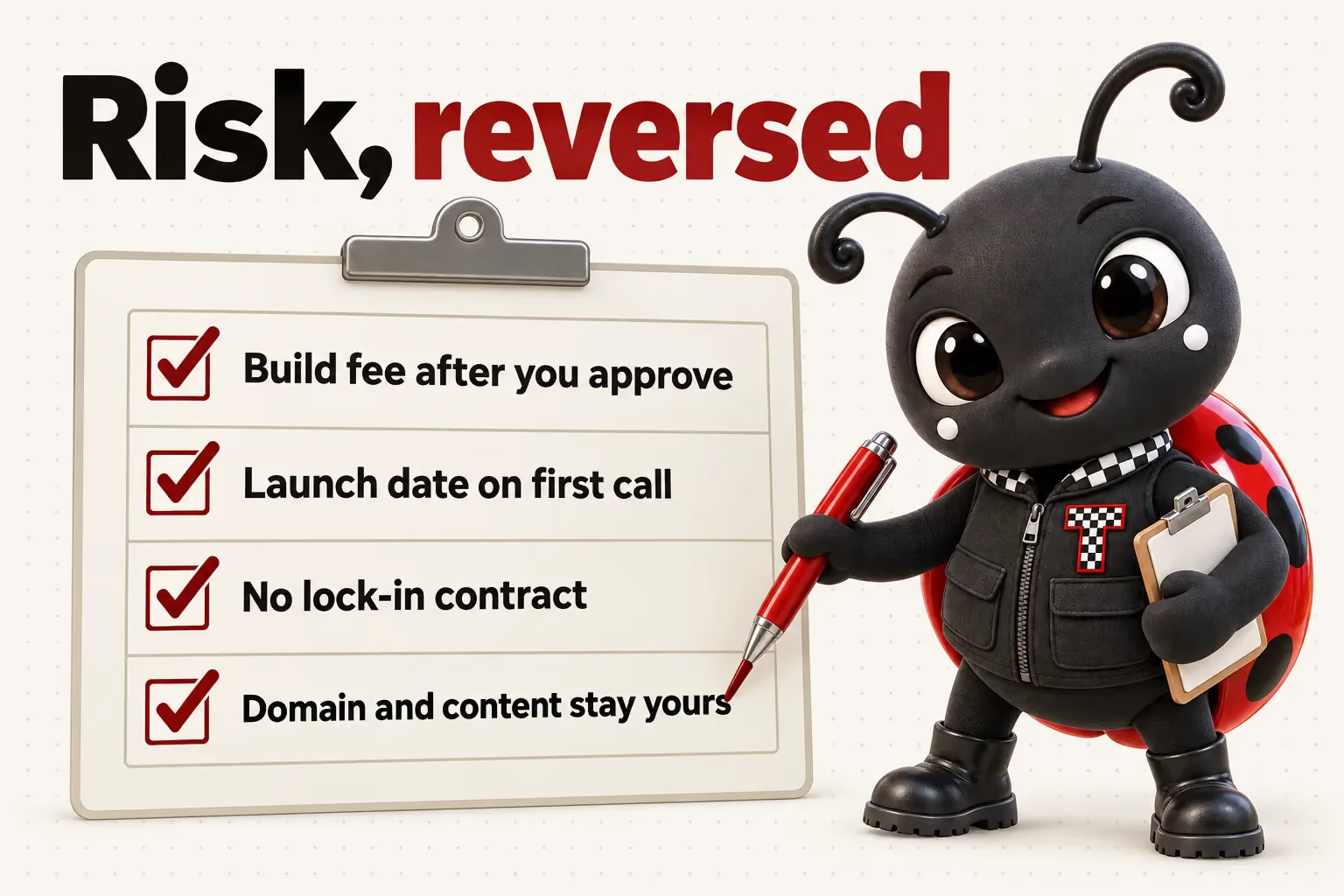
Risk, reversed
What happens if it is not right?
You do not pay the build fee until you have approved the live site, and you are never locked in. The terms below are the same ones in our terms and conditions.
The build fee comes after you approve
The $697 one-time build fee is invoiced only once your site is live and you have confirmed you are satisfied with it. Never at signup.
A 90+ PageSpeed standard
Every plan is held to a 90+ Google PageSpeed score on mobile and desktop as an ongoing standard, not a launch-day screenshot.
A launch date agreed on the first call
Live in 7, 10 or 15 working days depending on plan, counted from your onboarding call. Nothing goes public until you say so.
No lock-in contract
Cancel by email at least 2 business days before your next invoice date, during business hours. No exit fee.
Your domain and content stay yours
A domain registered in your name stays yours after cancellation, and we export your content and articles within 14 days.
Pages that come with your site
Which compliance pages come with an auction website?
Every site launches with the standard policy pages plus the disclosures an auction house needs, built with US rules in mind and written from your own terms.
Privacy policy
Written from how your site actually collects data (registration, contact and chat), with US state privacy laws such as the California Consumer Privacy Act (CCPA) in mind.
Terms of use
The terms for using the site, kept separate from your sale terms so neither gets buried in the other.
Cookie policy with real consent
A consent banner that holds analytics and marketing scripts until a visitor agrees, not a banner that blocks nothing.
Accessibility statement
A statement of the standard the site is built to, with the Americans with Disabilities Act (ADA) and WCAG 2.2 AA in mind: keyboard access, contrast, focus and readable text.
SMS consent wording
Opt-in wording beside any form that collects a phone number, written with the Telephone Consumer Protection Act (TCPA) in mind, and A2P 10DLC carrier registration filed on AI plans.
Sale terms and as-is conditions
Your sale terms, as-is language and arbitration window as you define them, on their own page and linked from every listing.
Buyer fees and deposits
Buy fees, deposits and refund terms stated in plain language from your own policy, before anyone registers.
Title and odometer status fields
Required title-status and odometer-status fields on every listing, laid out with federal odometer disclosure rules in mind. The determinations are yours.
These pages and fields help you meet common US obligations. We are not a law firm and this is not legal advice: your own attorney should review the wording for your business, and your sale terms, fees and vehicle determinations always come from you. We are not a licensed auctioneer, dealer, title agent or vehicle inspector.
Coverage
Do you build for auction houses in my state?
Yes. We work remotely with vehicle auction houses anywhere in the United States, from single-lane public sales to multi-lane wholesale operations in Texas, Florida, California, Georgia, Pennsylvania and Ohio.
Texas
Florida
California
Georgia
Pennsylvania
Ohio
Arizona
North Carolina
Tennessee
Illinois
Your site gets pages for the areas your own sales draw from: the cities your dealers drive in from, the counties your fleet and repo consignors are based in. Those pages are built on your site, for your market, with real sale details on them, never thin copies with a town name swapped in.
Everything runs on one schedule: 9:00 to 17:00 Central Time, Monday to Friday, excluding US public holidays. Who builds it.
Versus the alternatives
Why not a website builder, a freelancer or an agency?
Any of them can be the right call for some houses. Here is the honest one-line answer for each, with a full, fair comparison behind every link.
A custom-coded website for your auction house: a run list page for every vehicle, lane and sale-day pages, a condition report layout, buyer registration connected to your CRM, managed hosting, weekly run list updates and researched articles. Run List covers the site itself; Condition Report adds the AI Engine; Full Consignment adds the Content Engine. Every plan carries the same one-time build fee, invoiced only after your site is live and approved.
How long until my site is live?
Launch takes 7, 10 or 15 working days depending on tier, starting after your onboarding call. The build fee is invoiced only once you have approved the finished site, never at signup.
When is the build fee charged?
The $697 one-time build fee is invoiced only after your site is live and you have confirmed you are satisfied with it. It is never charged at signup.
What does the AI Engine actually do?
Included on Condition Report and Full Consignment, it answers routine questions through site chat, SMS, Messenger and Instagram at any hour: sale times, registration requirements, general lane information. Anything specific to a vehicle's condition, value or title status is handed off to your team rather than answered by the assistant.
Can a faster website lower what I pay for Google Ads?
It can help. Google Ads rates keywords with a Quality Score, and landing page experience is one of its three components, so a fast, relevant page is part of earning a better score, which can lower cost per click. More of the clicks you pay for also stay long enough to register. We hold every page to a 90+ PageSpeed standard, but we never promise a specific cost or ranking.
What is AEO and GEO, and do I get them?
Yes, on every plan. AEO (answer engine optimization) means answer-first copy and FAQ blocks that search features and voice assistants can lift. GEO (generative engine optimization) means making your site easy for AI assistants such as ChatGPT, Claude, Perplexity and Google AI Overviews to read and cite, with an llms.txt file and consistent, factual naming. Nobody can guarantee an AI mention; this is the groundwork that makes one more likely.
Which legal and policy pages come with my site?
A privacy policy, terms of use, a cookie policy with a consent banner that holds analytics and marketing scripts until a visitor agrees, and an accessibility statement. Auction sites also get sale terms and as-is conditions, buyer fee and deposit terms, and required title-status and odometer-status fields on every listing.
Do you grade vehicles or set reserve prices?
No. We build the page and layout your condition report lives on, but the grading, inspection, reserve price and any valuation come from your team or an inspection service you already use. We are not a licensed auctioneer, dealer or vehicle inspector.
Do you work with auction houses in my state?
Yes. We work remotely with vehicle auction houses anywhere in the United States, including Texas, Florida, California, Georgia, Pennsylvania, Ohio, Arizona and North Carolina.
What is your cancellation policy?
Email us at least 2 business days before your next invoice date, during business hours (9:00 to 17:00 Central, Monday to Friday, excluding US public holidays), and no further invoice is raised. A weekend email does not count toward the 2 business days for a Monday or Tuesday invoice.